

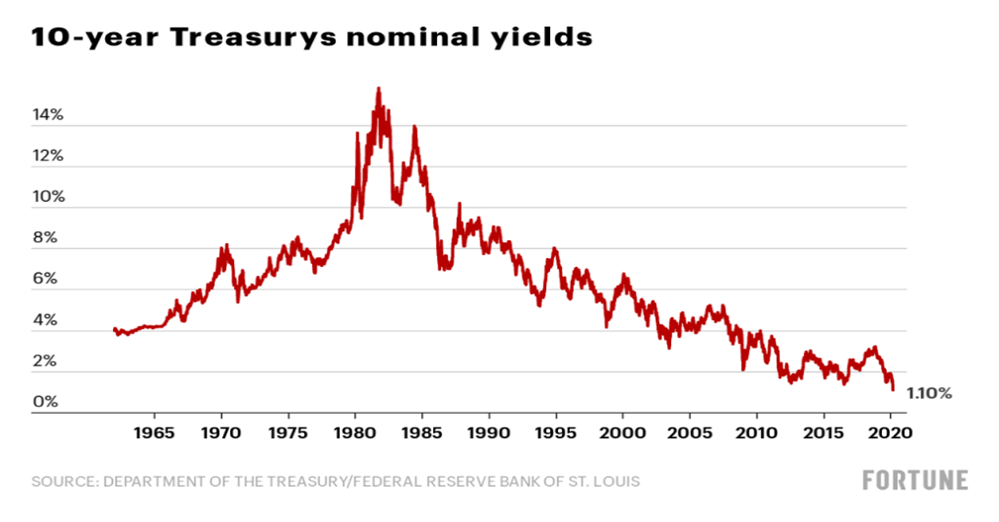
The bond bull market meant that almost any bond investment could be used to successfully protect a stock market portfolio. But the recent pandemic-driven market crash provided an important test of our investment portfolios. For a variety of reasons, most bond funds did not provide the protection investors expected when the stock market crashed.
The Pandemic Test
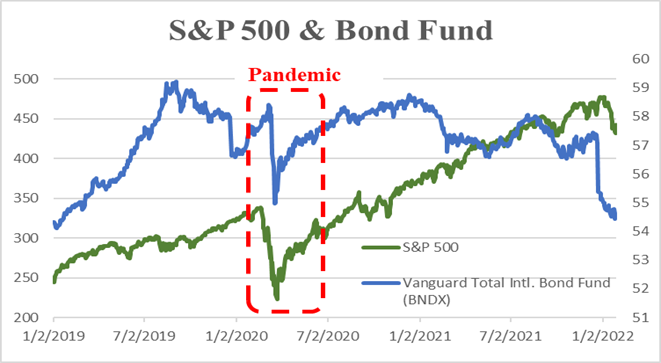
Rather than mitigating risk during the pandemic crash, many bond funds followed the same path as the S&P 500 – a sharp crash followed by a steady recovery. Corporate bond prices fell sharply as the market worried about defaults. Investors were demoralized to see the defensive portion of their portfolio fall along with the stock market.
Time to Declare Victory?
While the S&P 500 continued to flourish in 2021, posting a 28.8% return, the bond fund lost 3.5%. The fund continued to fall in 2022 as inflation pushes interest rates higher.
If bond funds have limited upside, produce little cash flow, and can no longer provide protection against market volatility, should we still own them? For some investors it may make sense to declare victory – sell their bonds at today’s relatively high prices – and find an investment that better matches their specific risk profile.
Buying the right protection
Each investor has unique goals and should therefore protect against the risks that threaten to derail those goals. We will look at 3 common portfolio threats that investors want to protect against and suggest tools that work better to limit risk than bond mutual funds or ETFs.
Goal #1 – Crash Protection
Many investors buy bond funds to protect against a stock market crash. But if their goal is to build a defined floor under their nest egg, this is clearly not the right investment.
Insured products, such as annuities, when selected carefully, can offer investors risk-free access to the markets. Some products even allow the holder to participate in stock market upside without compromising any downside protection (article: annuity holders outperformed stock holders). But the main benefit is the comfort of loss protection when markets are crashing. This peace of mind can be invaluable.
Goal #2 – Cash Flow Creation & Total Return
Other investors turn to bonds to create total return via cash flow, but low interest rates generally mean small coupon payments and very modest annual cash flows. Limited cash flow leaves such funds at the mercy of interest rate and/or credit swings.
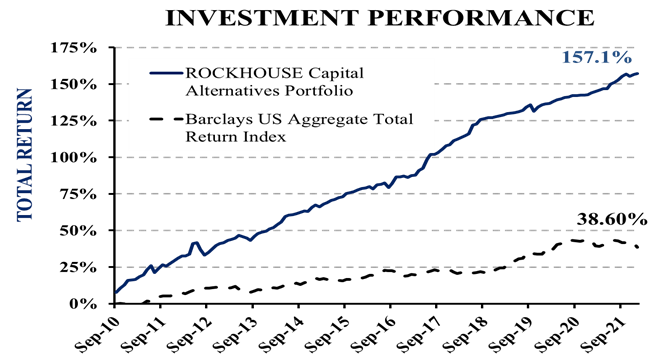
There are bonds that produce enough cash flow to produce consistent total return in all interest rate and credit scenarios. Rockhouse Capital has consistently outperformed the bond indexes by using deep analysis to select high cash flow investments.
Goal #3 – Source of Funds to ‘Buy The Dip’
When markets crash the Federal Reserve reflexively cuts interest rates to help stimulate the economy. While corporate bonds can be overwhelmed by credit concerns, US Treasury bonds typically respond to falling interest rates by rising in price. Long maturity Treasury products were the star of the pandemic – jumping in value as the rest of the market sank.
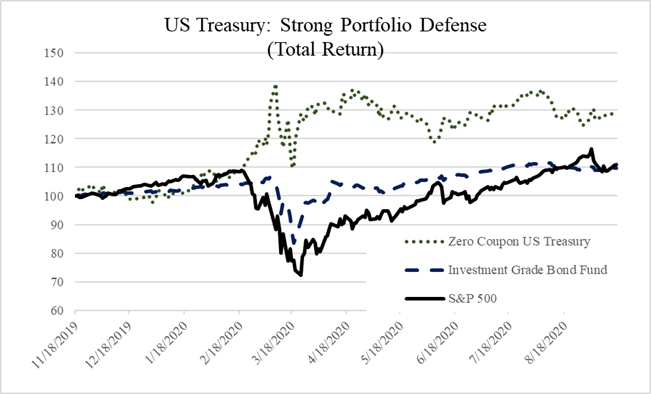
Because US Treasuries are seen as having no credit risk the market buys them as a ‘flight to safety’ which further buoys the price of bonds when stock markets fall.
For investors looking to buy the dip when markets crash, Treasury bonds can be a great source of funds.
Conclusion
The low interest rate environment makes it far more difficult to protect our investment portfolios. Investors should assess their current protection to be sure it matches their risk profile. The best time to adjust is now, while markets are strong and bond prices are still relatively high.
The Senior Source is a professional firm located in Enfield, CT designed to assist seniors in protecting their assets and standard of living.
We protect our clients with the highest quality insured investment products.
Because we recognize that some of you also hold risk investments, we want to share this information from trusted peer — Terry Kaufmann — who specializes in the bond market.
Terry is an excellent resource for anybody with questions about the bond market in general or about their particular investment portfolio.
For more information Contact us
For related educational material, explore our annuity planning information and financial planning guide. Review current risks and contract terms before making a financial decision.